

◆
Drives new blood vessel formation at the site of injury — upregulating VEGF to fuel repair exactly where it's needed.
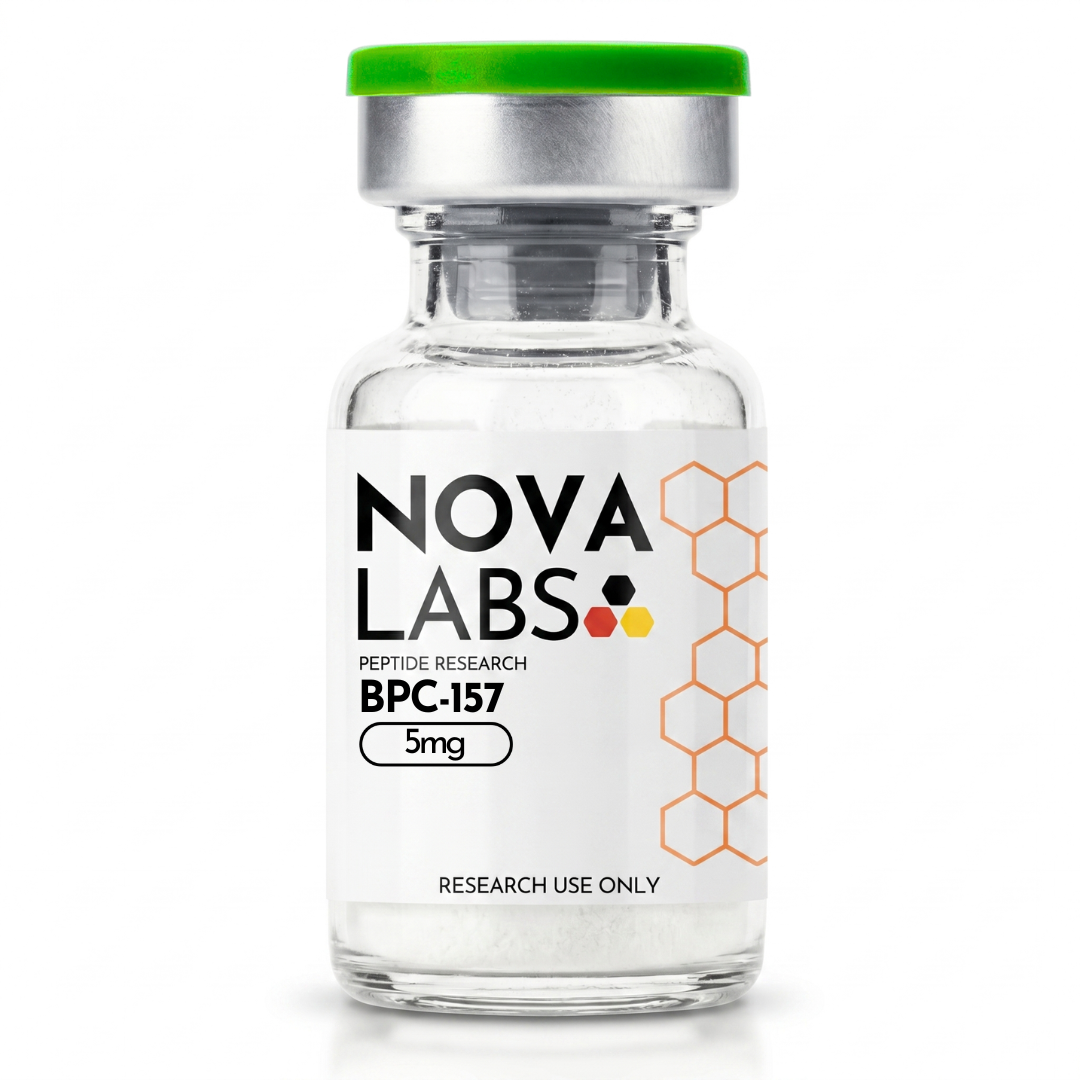
Dose ranges reflect commonly studied amounts in published research models. This is not medical advice. For research use only. Not for human consumption.
Protocol Comparison
Recovery
Research dose range
Standard research range
250 - 350 mcg
Sits within the most frequently cited daily protocol range (250-500 mcg).
Research focus
Localized tissue repair & angiogenesis
Observed window
4-6 weeks
Administration
Once or twice daily laboratory protocol
Primary pathway
VEGF / Angiogenesis / Nitric Oxide
Dosing ranges compiled from research protocol summaries; not derived from a single controlled human trial. For research use only.
PROTOCOL BENEFITS
◆
Drives new blood vessel formation at the site of injury — upregulating VEGF to fuel repair exactly where it's needed.
◆
Supports tendon, ligament, and muscle repair by boosting collagen synthesis and growth hormone receptor activity in connective tissue.
◆
Calms the inflammatory response while repair takes over — modulating nitric oxide signaling and cytokine activity at the injury site.
SCIENCE
BPC-157 is a pentadecapeptide — a partial sequence of the body protection compound naturally found in gastric juice. It's stable, resistant to enzymatic breakdown, and built to act right at the site of injury: driving new blood vessel growth, boosting collagen production, and recruiting the cellular machinery tissue needs to repair itself.
The evidence base here is mostly preclinical. BPC-157's tissue-repair effects are extensively documented in animal models across muscle, tendon, ligament, and bone injury — human data is still limited to small pilot studies. One trial in chronic knee pain patients found sustained relief in most participants after a single injection.
WHAT TO EXPECT
Anti-inflammatory changes are often the earliest reported shift in research models. Structural tissue repair takes longer — most protocols track progress over 4–6 weeks.
PROTOCOL NOTE
Available in 5 mg. Strictly for laboratory research use.
FAQ
BPC-157 acts primarily locally through VEGF upregulation and nitric oxide pathways to accelerate tendon, ligament, and gut mucosal healing, whereas TB-500 operates systemically via actin sequestration and cellular motility.
Extensively studied across preclinical models of tendon-to-bone healing, ligament transection, muscle crush injury, and gastric ulcer repair.
RELATED PRODUCTS