

◆
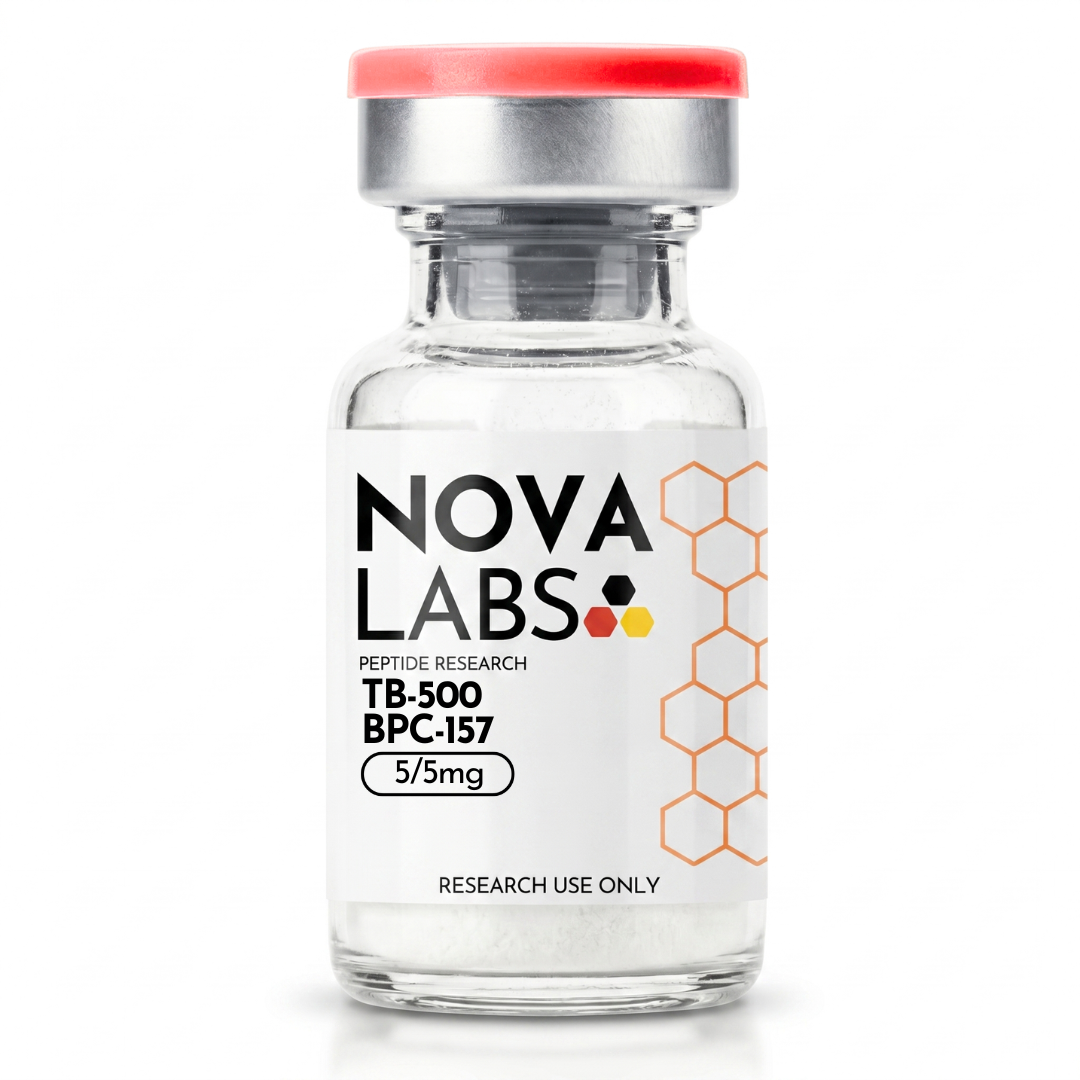
Gold standard dual-recovery stack: BPC-157 (5mg) + TB-500 (5mg) in a single calibrated vial.
Dose ranges reflect commonly studied amounts in published research models. This is not medical advice. For research use only. Not for human consumption.
Protocol Comparison
Recovery
Research dose range
Standard research range
500 - 750 mcg
Standard experimental range for acute tendon, ligament, or muscle tear recovery.
Research focus
Systemic and localized musculoskeletal tissue recovery
Observed window
4-8 weeks
Administration
Daily or alternate-day laboratory protocol
Primary pathway
VEGF / Nitric Oxide / G-actin sequestration
Dosing derived from animal tissue injury trials and experimental recovery literature. Strictly for laboratory research use.
PROTOCOL BENEFITS
◆
Gold standard dual-recovery stack: BPC-157 (5mg) + TB-500 (5mg) in a single calibrated vial.
◆
Combines localized angiogenetic tissue healing with systemic actin-mediated cell migration.
◆
Extensively studied across tendon, ligament, muscle, and gut mucosa repair models.
SCIENCE
The 'Wolverine' stack represents the most widely studied peptide pairing in experimental regenerative biology. BPC-157 and TB-500 address recovery through non-overlapping, mutually reinforcing physiological mechanisms.
BPC-157 operates locally by upregulating VEGF and VEGFR2, promoting immediate microvascular capillary sprout formation at the injury site. TB-500 (Thymosin Beta-4 fragment) acts systemically by sequestering G-actin, enabling regenerative stem cells and endothelial precursors to migrate freely to the repair zone.
WHAT TO EXPECT
Local pain and inflammatory signaling shifts are observed within the first 1–2 weeks. Full structural tissue remodeling and fiber realignment require 4–8 weeks in biomechanical research models.
PROTOCOL NOTE
Available as BPC-157 5mg + TB-500 5mg (10mg total). Strictly for laboratory research use.
FAQ
They operate through distinct yet complementary mechanisms: BPC-157 drives localized angiogenic repair, whereas TB-500 regulates systemic cellular motility via actin dynamics.
Not necessarily. At standard BPC-157 microgram ranges, TB-500 quantities are lower than typical standalone TB-500 protocols. Check protocol notes before equating blend ratios to separate vial use.
RELATED PRODUCTS