

◆
Essential cellular coenzyme fundamental for mitochondrial ATP generation and electron transport.
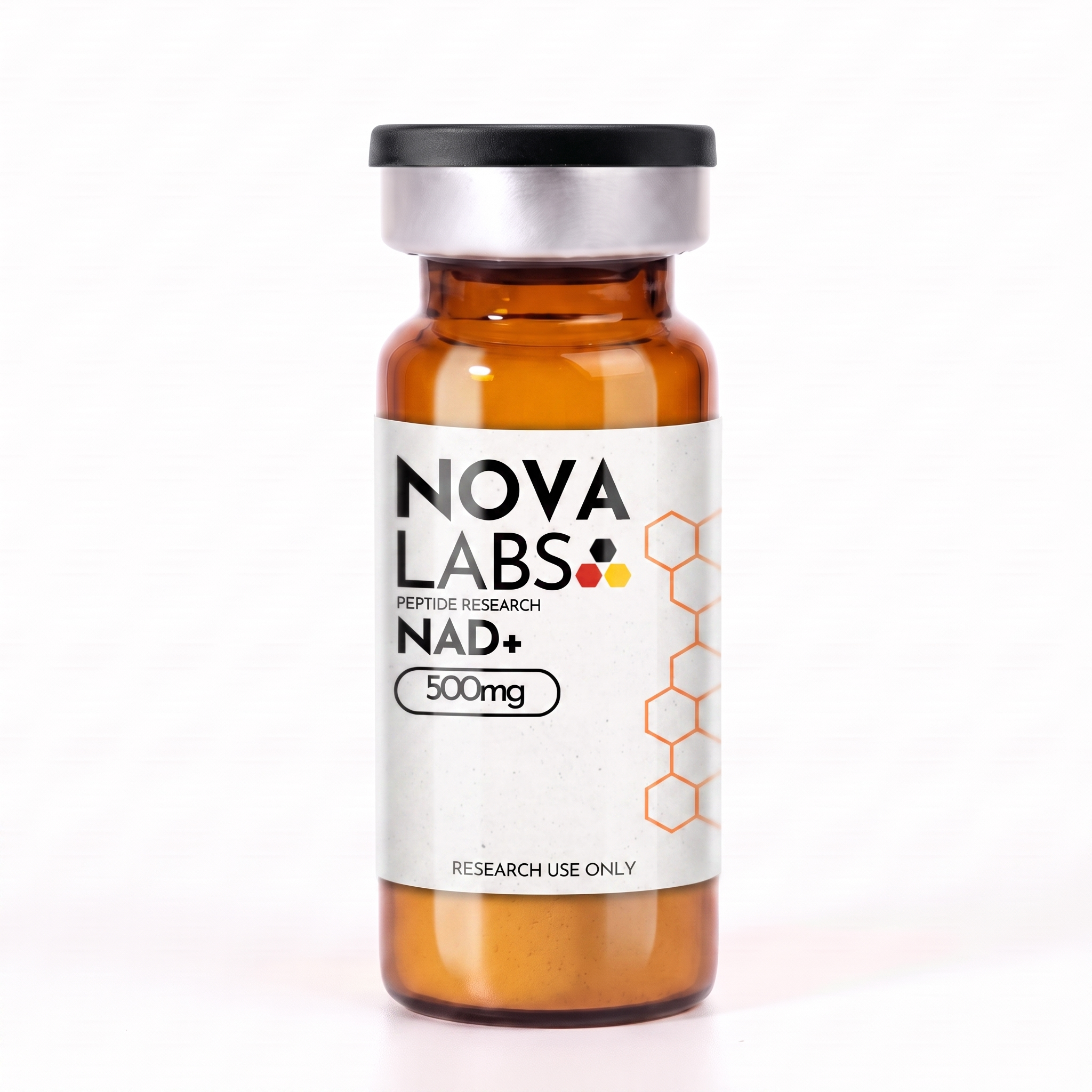
Dose ranges reflect commonly studied amounts in published research models. This is not medical advice. For research use only. Not for human consumption.
Protocol Comparison
Longevity
Research dose range
Standard research range
50 - 75 mg
Standard research concentration for sustained mitochondrial coenzyme replenishment.
Research focus
Mitochondrial energy restoration & sirtuin activation
Observed window
4-12 weeks
Administration
1-3x weekly laboratory protocol
Primary pathway
Cellular Redox (NAD+/NADH) / Sirtuins (SIRT1) / PARP-1
Dosing compiled from clinical longevity and cellular energetics literature. For laboratory research only.
PROTOCOL BENEFITS
◆
Essential cellular coenzyme fundamental for mitochondrial ATP generation and electron transport.
◆
Obligate substrate for sirtuin enzymes (SIRT1-7) and PARP DNA repair proteins.
◆
Replenishes age-related cellular energy decline, supporting cognitive and metabolic vitality.
SCIENCE
NAD+ (nicotinamide adenine dinucleotide) is a vital coenzyme present in all living cells, central to cellular redox reactions that power mitochondrial oxidative phosphorylation. Without sufficient NAD+, cells cannot oxidize glucose, fatty acids, or amino acids to synthesize ATP.
Beyond energy metabolism, NAD+ is consumed as a co-substrate by sirtuins (longevity-regulating deacetylases) and PARP enzymes responsible for repairing DNA double-strand breaks. Because cellular NAD+ levels decline by up to 50% between youth and middle age, replenishment protocols are central to longevity biology.
WHAT TO EXPECT
Cellular redox ratio shifts and subjective vitality improvements are typically evaluated within 1–2 weeks, with sustained epigenetic and metabolic benefits assessed across 8–12 week models.
PROTOCOL NOTE
Available in 500 mg sterile lyophilized vials. For laboratory research only.
FAQ
Injectable delivery bypasses gastrointestinal degradation. In the bloodstream, extracellular NAD+ is cleaved into nicotinamide/NR and taken up by cells to be rapidly resynthesized via the intracellular salvage pathway.
Subcutaneous delivery provides gradual capillary uptake with milder vascular flush sensations, whereas intramuscular injection achieves rapid systemic bioavailability.