

◆
Stimulates collagen and glycosaminoglycan synthesis in dermal fibroblast models.
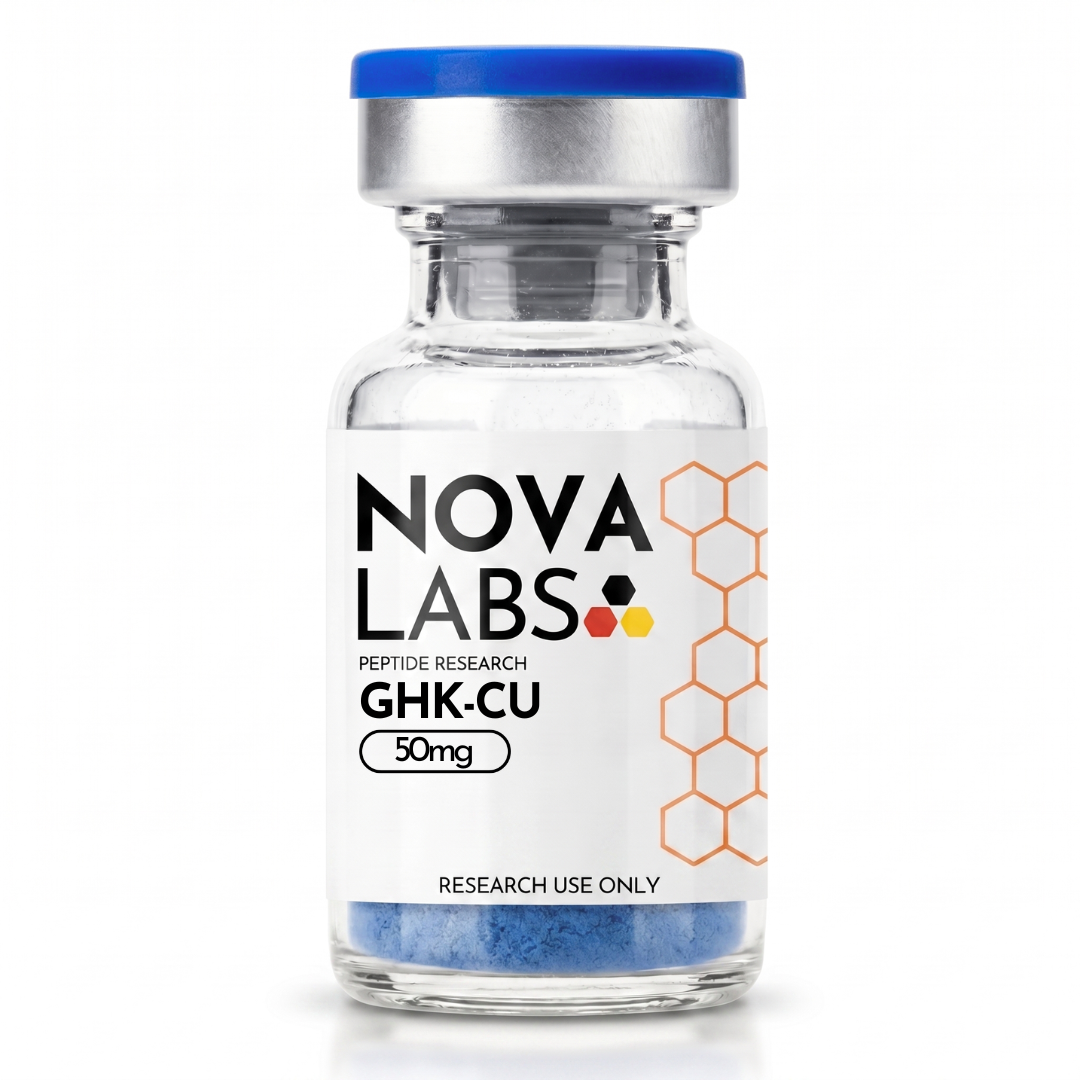
Dose ranges reflect commonly studied amounts in published research models. This is not medical advice. For research use only. Not for human consumption.
Protocol Comparison
Skin & Hair
Research dose range
Standard research range
2 - 3 mg
Standard research concentration for active collagen and matrix remodeling protocols.
Research focus
Dermal remodeling & cellular signaling
Observed window
4-8 weeks
Administration
Daily or alternate-day laboratory administration
Primary pathway
Collagenase / TIMP / TGF-beta modulation
Dosing references compiled from published academic literature and in-vitro studies. Strictly for laboratory research use.
PROTOCOL BENEFITS
◆
Stimulates collagen and glycosaminoglycan synthesis in dermal fibroblast models.
◆
Modulates gene expression involved in cellular repair and anti-aging signaling cascades.
◆
Documented tissue remodeling and localized anti-inflammatory activity.
SCIENCE
GHK-Cu is a naturally occurring copper tripeptide (glycyl-L-histidyl-L-lysine:copper) found in human plasma. It functions as a feedback signaling molecule generated following tissue injury, binding copper ions with high affinity to regulate dermal remodeling enzymes such as metalloproteinases and TIMPs.
Extensive literature by Pickart et al. indicates GHK alters the expression of thousands of human genes, upregulating DNA repair mechanisms and collagen production while suppressing pro-inflammatory cytokines such as TGF-beta and TNF-alpha.
WHAT TO EXPECT
Dermal remodeling and fibroblast signaling require time. Research models evaluate cellular density and extracellular matrix changes over 4 to 8 weeks.
PROTOCOL NOTE
Available in 50 mg. Strictly for laboratory research purposes.
FAQ
Injectable administration bypasses the stratum corneum barrier, delivering systemic bioavailability directly into circulation without reliance on topical carrier permeability.
Most clinical and laboratory models observe an 8-week active administration period followed by an 8-week washout period to preserve natural copper-zinc physiological homeostasis.