

◆
Synthetic analog of alpha-MSH that stimulates melanocytes via MC1R to induce melanogenesis.
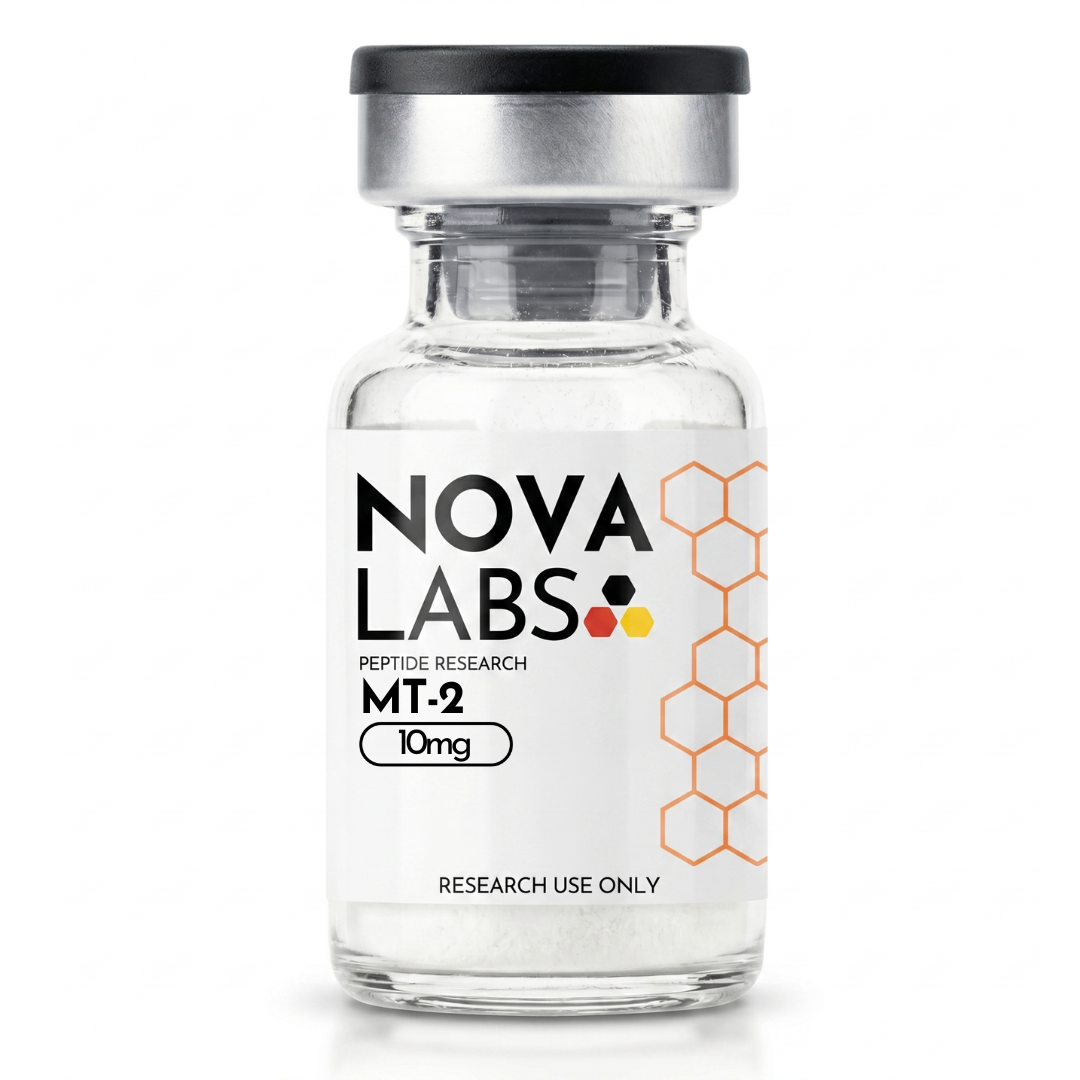
Dose ranges reflect commonly studied amounts in published research models. This is not medical advice. For research use only. Not for human consumption.
Protocol Comparison
Skin & Hair
Research dose range
Standard research range
250 - 500 mcg
Common intermediate induction range balancing steady pigment production and tolerability.
Research focus
Melanogenesis & pigmentation pathway stimulation
Observed window
3-7 days visible; 2-4 weeks peak
Administration
Daily induction phase / Weekly maintenance protocol
Primary pathway
Melanocortin Receptors (MC1R / MC3R / MC4R)
Dosing referenced from Phase I human study (Dorr et al., 1996, 0.025 mg/kg body weight). Strictly for laboratory research use.
PROTOCOL BENEFITS
◆
Synthetic analog of alpha-MSH that stimulates melanocytes via MC1R to induce melanogenesis.
◆
Triggers biological pigment production without requiring harmful UV radiation exposure.
◆
Co-stimulates central MC4R receptors, displaying secondary effects on appetite and sexual desire.
SCIENCE
Melanotan-2 (MT-2) is a synthetic cyclic lactam analog of alpha-melanocyte-stimulating hormone designed with enhanced enzymatic resistance and prolonged biological activity compared to endogenous peptides.
MT-2 acts non-selectively across melanocortin receptor subtypes MC1R, MC3R, and MC4R. Activation of MC1R on epidermal melanocytes triggers the enzymatic conversion of tyrosine into eumelanin, producing physiological skin pigmentation independently of solar UV radiation.
WHAT TO EXPECT
Visible pigmentation shifts typically begin within 3 to 7 days, reaching peak coloration over 2 to 4 weeks of consistent research administration.
PROTOCOL NOTE
Available in 10 mg sterile vials. For laboratory research only.
FAQ
MT-2 is a non-selective melanocortin receptor agonist, co-activating MC1R (driving melanogenesis in melanocytes) and MC4R (activating central hypothalamic arousal circuits).
Mild transient nausea can occur during early induction doses due to peripheral receptor activation, typically decreasing as protocol habituation occurs.