

◆
Precision skin & connective tissue matrix formula: GHK-Cu, BPC-157, and TB-500.
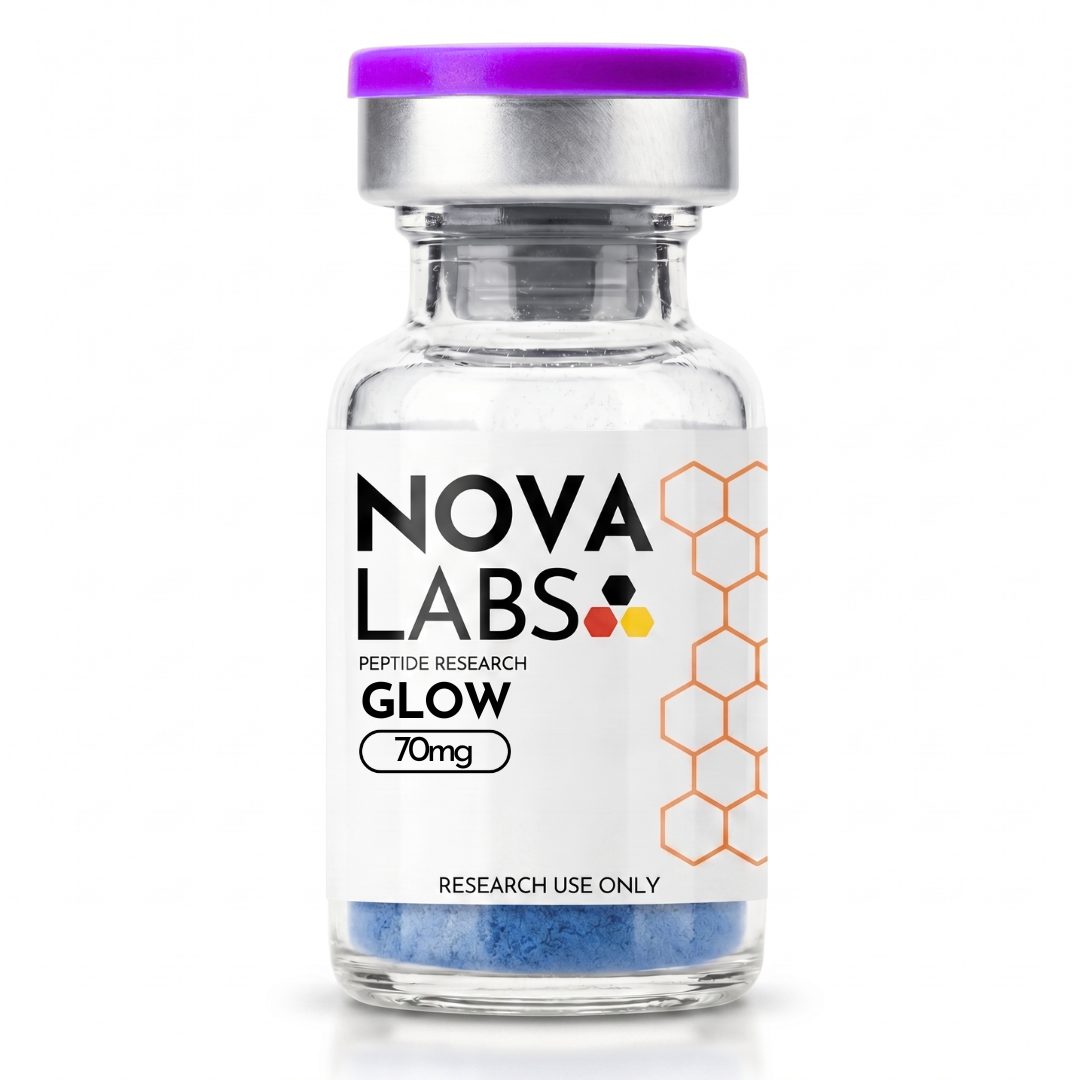
Dose ranges reflect commonly studied amounts in published research models. This is not medical advice. For research use only. Not for human consumption.
Protocol Comparison
Skin & Hair
Research dose range
Standard research range
500 - 750 mcg
Core experimental protocol for active dermal remodeling and microvascular support.
Research focus
Connective tissue & dermal matrix regeneration
Observed window
6-12 weeks
Administration
Daily or alternate-day laboratory administration
Primary pathway
VEGF / Collagen I & III / Actin cytoskeleton remodeling
Dosing extrapolation based on individual constituent peptide literature. Strictly for in-vitro and laboratory research use.
PROTOCOL BENEFITS
◆
Precision skin & connective tissue matrix formula: GHK-Cu, BPC-157, and TB-500.
◆
Simultaneously promotes microvascular angiogenesis, fibroblast migration, and pro-collagen synthesis.
◆
Engineered to support comprehensive extracellular matrix repair and dermal rejuvenation.
SCIENCE
GLOW Blend unites three benchmark peptides into a unified cellular regeneration solution: GHK-Cu (copper tripeptide), BPC-157 (pentadecapeptide), and TB-500 (thymosin beta-4 fragment). Together, they address connective tissue remodeling across three separate biological tiers.
GHK-Cu stimulates dermal fibroblast migration and collagen type I/III synthesis; BPC-157 upregulates VEGF and early growth response-1 (egr-1) for vascularization; and TB-500 sequesters G-actin to enable rapid cellular motility across injured tissue matrices.
WHAT TO EXPECT
Localized tissue hydration and anti-inflammatory markers respond within 1–2 weeks, while structural dermal collagen density changes are tracked across 6–12 week observation windows.
PROTOCOL NOTE
Available in combined multi-peptide research vials. Strictly for laboratory research.
FAQ
GLOW combines GHK-Cu, BPC-157, and TB-500 for skin and tissue remodeling. KLOW uses the same core formulation with the addition of KPV to target active inflammatory cascades.
Not necessarily. GLOW provides fixed proportions (50 mg GHK-Cu, 10 mg BPC-157, 10 mg TB-500), whereas separate vials permit independent titration of each constituent compound.