

◆
Potent synthetic heptapeptide derived from adrenocorticotropic hormone (ACTH 4-10).
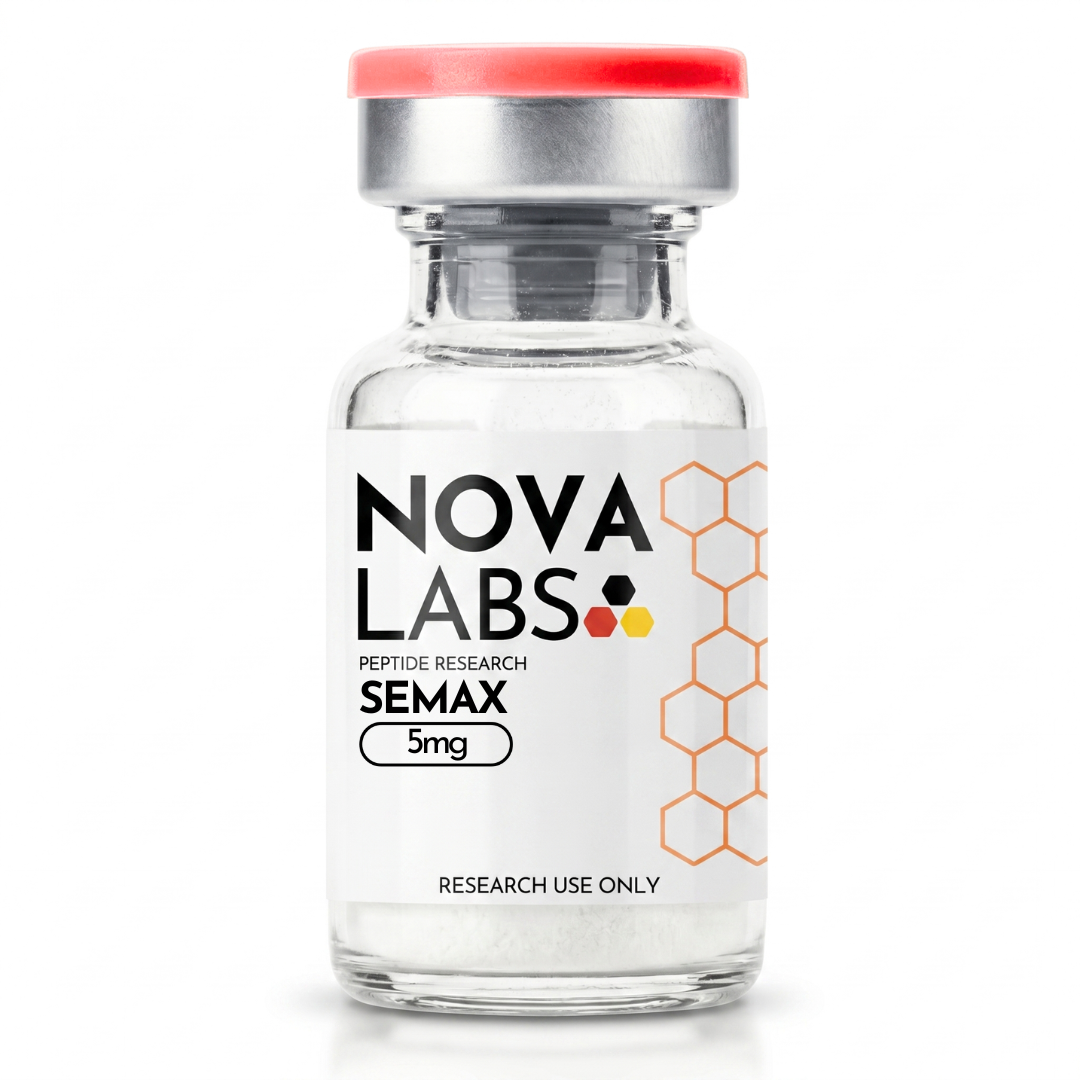
Dose ranges reflect commonly studied amounts in published research models. This is not medical advice. For research use only. Not for human consumption.
Protocol Comparison
Cognitive
Research dose range
Standard research range
400 - 600 mcg
Standard experimental protocol for cognitive endurance and focus tasks.
Research focus
Central neurotrophin expression (BDNF/NGF) & focus
Observed window
10-20 days active cycle
Administration
1-2x daily laboratory protocol
Primary pathway
ACTH(4-10) / TrkB Receptor / BDNF transcription
Dosing referenced from Russian Pharmacopeia neuroprotection monographs. For laboratory research only.
PROTOCOL BENEFITS
◆
Potent synthetic heptapeptide derived from adrenocorticotropic hormone (ACTH 4-10).
◆
Dramatically stimulates BDNF and NGF expression in the hippocampus and prefrontal cortex.
◆
Improves cognitive clarity, cerebral circulation, and memory consolidation without systemic hormone activity.
SCIENCE
Semax was developed by the Institute of Molecular Genetics at the Russian Academy of Sciences. It consists of the ACTH(4-10) fragment modified with a C-terminal Pro-Gly-Pro extension that protects against peptidase degradation.
Crucially, Semax completely lacks the hormonal corticotropic effects of full ACTH. Instead, it selectively activates TrkB neurotrophic pathways, increasing BDNF and NGF transcription to stimulate dendritic arborization and synaptic plasticity.
WHAT TO EXPECT
Alertness and memory processing improvements are documented within 30 minutes of administration. Long-term synaptic remodeling is evaluated over 10–20 day research paradigms.
PROTOCOL NOTE
Available in 10 mg lyophilized vials. For laboratory research use only.
FAQ
Semax does not induce abrupt catecholamine surges or dopamine depletion. Its effects are mediated by neurotrophic signaling (BDNF/trkB activation) and neurovascular protection that build over days to weeks.
Semax has been prescribed in Russia since the 1990s for stroke rehabilitation and cognitive decline, providing a substantial human safety and efficacy record.