

◆
Stabilized growth hormone-releasing factor (GRF) analog stimulating endogenous pulsatile GH secretion.
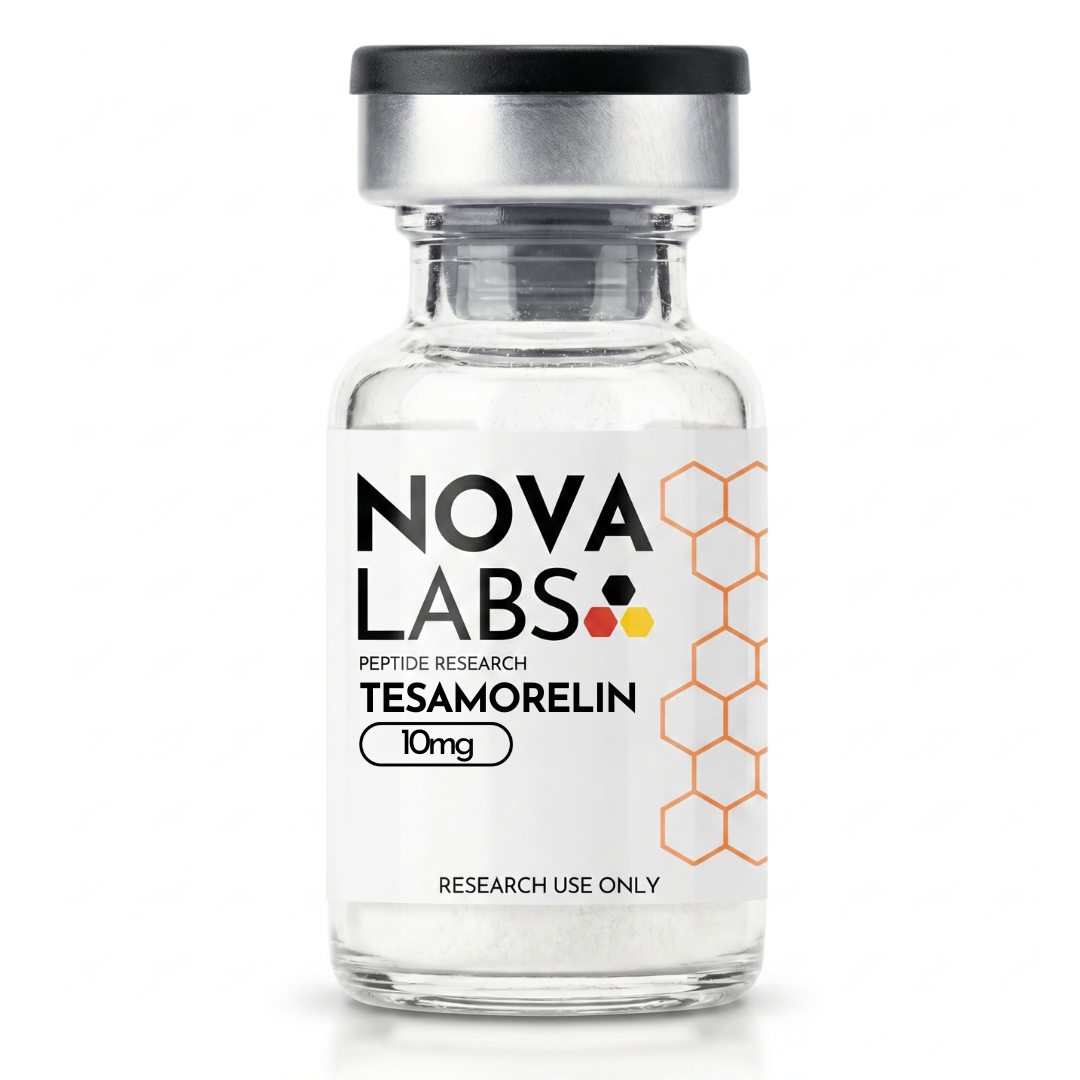
Dose ranges reflect commonly studied amounts in published research models. This is not medical advice. For research use only. Not for human consumption.
Protocol Comparison
Metabolic
Research dose range
Standard research range
1.5 - 2 mg
Clinical protocol dose (2 mg daily) established in Phase 3 visceral adiposity trials.
Research focus
Endogenous GH stimulation & visceral adipose reduction
Observed window
12-26 weeks
Administration
Daily laboratory protocol
Primary pathway
GHRH Receptor / Pituitary GH Secretion / IGF-1
Dosing referenced from FDA clinical documentation (Egrifta Phase III trials, Falutz et al.). Strictly for laboratory research use.
PROTOCOL BENEFITS
◆
Stabilized growth hormone-releasing factor (GRF) analog stimulating endogenous pulsatile GH secretion.
◆
Specifically evaluated for visceral adipose reduction without suppressing the natural pituitary axis.
◆
Demonstrates favorable effects on lipid profiles, IGF-1 levels, and hepatic fat reduction in clinical trials.
SCIENCE
Tesamorelin is a synthetic 44-amino-acid peptide analog of human growth hormone-releasing hormone (GHRH) with an added trans-3-hexenoic acid moiety for enhanced metabolic stability. It binds to pituitary GHRH receptors, stimulating the synthesis and physiological release of endogenous growth hormone in a pulsatile manner.
Unlike exogenous rhGH, Tesamorelin preserves somatostatin-mediated negative feedback, substantially reducing the risk of supraphysiological IGF-1 surges and abnormal glucose homeostasis while targeting deep visceral adipose tissue.
WHAT TO EXPECT
IGF-1 shifts can be measured within 2–4 weeks. Visceral adipose redistribution and body composition metrics are evaluated across 12–26 week clinical models.
PROTOCOL NOTE
Available in 10 mg. Strictly for laboratory research and development use.
FAQ
Tesamorelin has extensive Phase 3 human clinical trial data specifically evaluating visceral adipose tissue reduction, whereas CJC-1295 was primarily investigated as a general GHRH analog.
Although circulating half-life is brief, it triggers sustained pulsatile pituitary somatotroph release of endogenous growth hormone and IGF-1, maintained through once-daily administration.